How to Style Black Jeans for Work (By Industry and Dress Code)
Okay so, black jeans. Let’s talk about the time the intention was there and the execution just… wasn’t.
I got invited to a work event last minute. One of those “come celebrate the launch” things with actual leadership there, maybe some clients too, the kind of event where everyone else clearly got the group chat memo about dressing up and I did not. I thought it was a casual dinner and drinks.
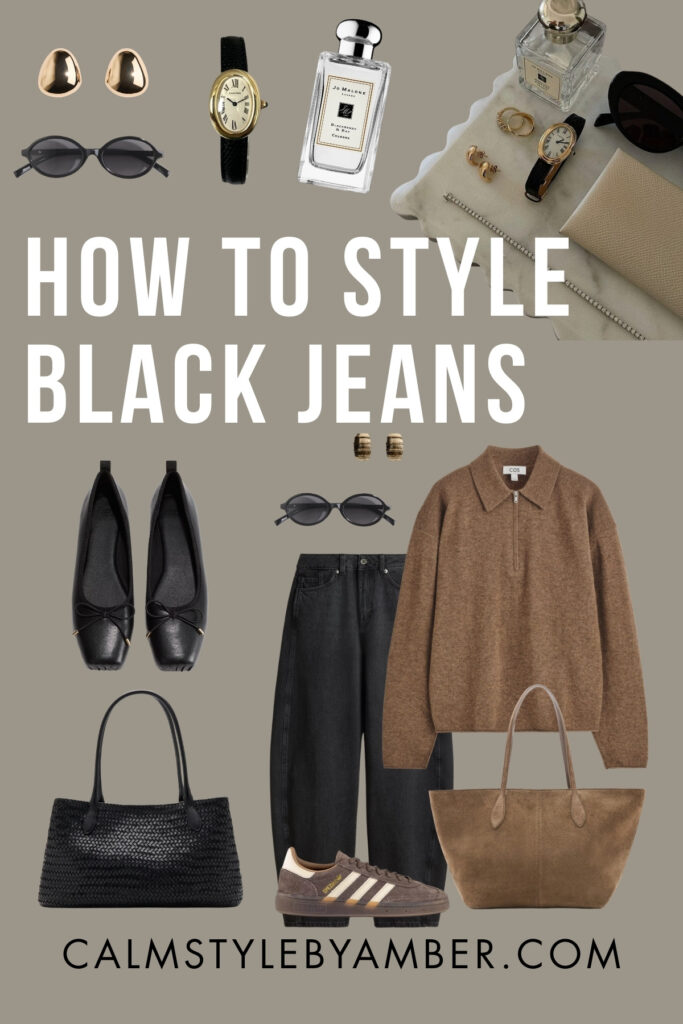
I had exactly zero minutes to think about it, so I did what I always do when I’m rushed: black jeans. Safe choice, right? Goes with everything, always looks decent, never fails me.
Except I paired them with a plain t-shirt and my everyday white sneakers. But I had a plan. I was pretty sure I had a blazer sitting in my car, one of those “just in case” pieces I keep around for exactly this kind of moment. So I figured, worst case, I’d throw that on in the parking lot and instantly look more professional.
Except the blazer wasn’t in the car. Lol. I have no idea where it went. Turns out “just in case” only works if the blazer actually stays where you think it does.
So I walked in exactly as I was. Plain tee, sneakers, jeans, no backup plan. And everyone around me was in blazers, heeled boots, statement jewelry, the whole “we understood the assignment” look. There I was in what was essentially my grocery store fit, holding a glass of wine, trying to look like this was intentional.
Nobody said anything, obviously. But I spent the entire event a little too aware of my sneakers.
Here’s the thing about black jeans, and it’s exactly why this mistake happens so easily: they’re deceptively versatile, which makes it tempting to treat every black jeans outfit as interchangeable. It is not. The jeans themselves can go from desk to dinner, but the rest of the outfit has to do the actual work of dressing up or down. A t-shirt and sneakers reads as “I didn’t think about this.” Swap in a blazer, a nicer top, and heeled boots, and the exact same jeans suddenly read as “I thought about this and chose to be comfortable anyway,” which is a completely different message.
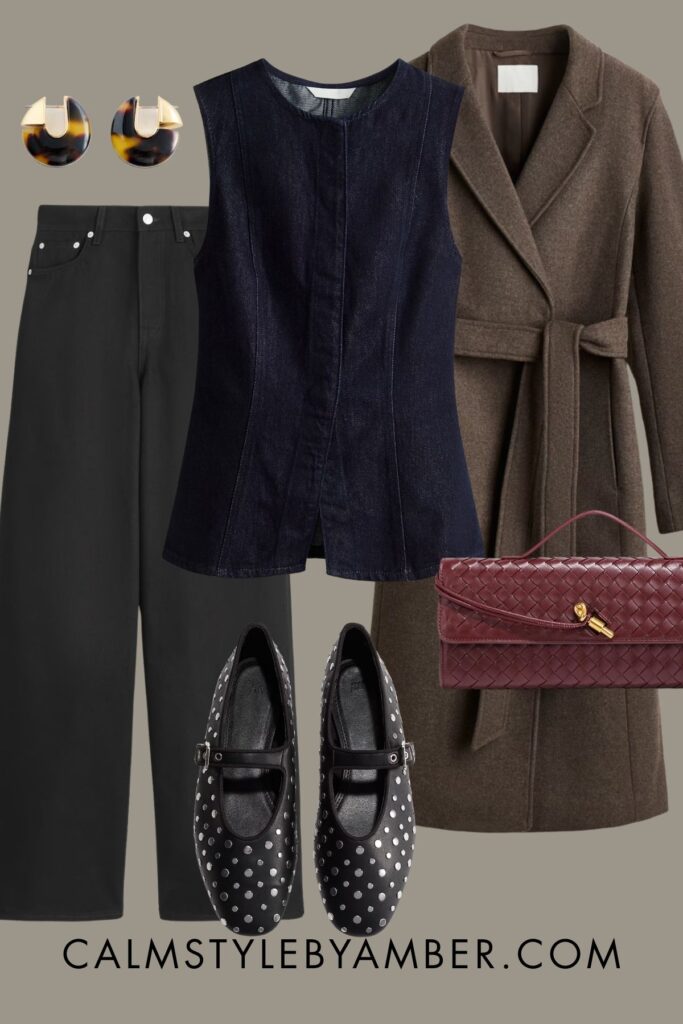
Lesson learned. I now actually check the trunk before I count on anything being there. And also, I finally sat down and figured out the actual rules for how to style black jeans for work, so I never have to guess-and-hope again. Sharing all of it below.
The quick gut check: are black jeans even allowed?
Before we get into outfit formulas, let’s answer the real question underneath the question. Will you actually get away with this?
Three things determine it, honestly.
Your dress code category. Business formal (suits, structured blazers, zero denim)? Black jeans are a no, no matter how you style them. Business casual or smart casual? You’ve got real room to play.
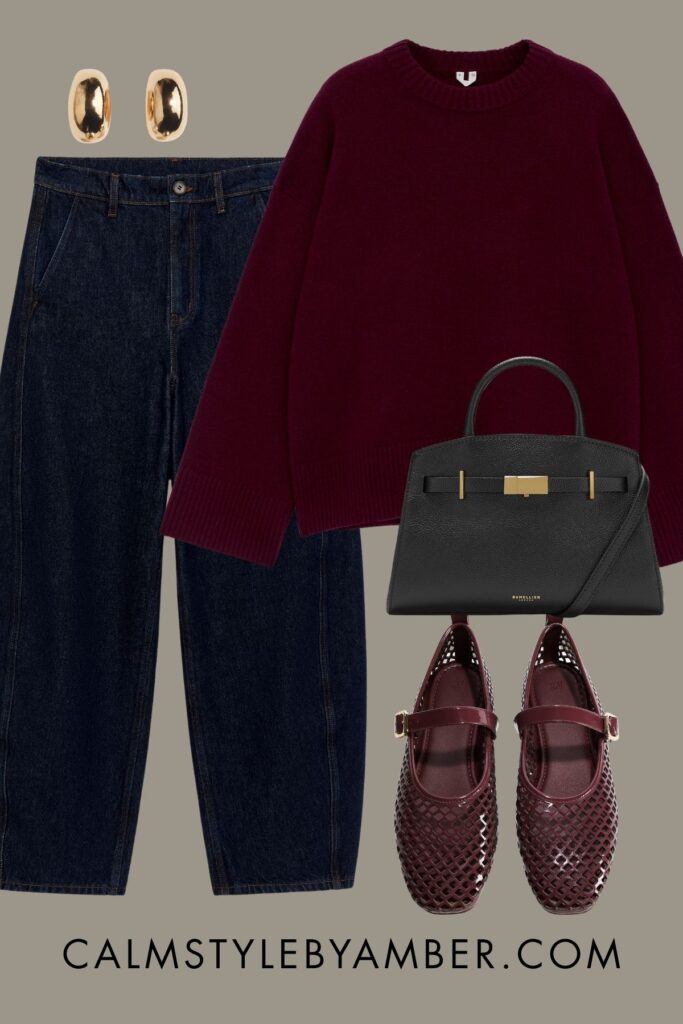
The unwritten culture, not just the handbook. Plenty of offices technically say “no jeans” and nobody enforces it. Watch what leadership and client-facing people actually wear. That tells you more than the policy doc ever will.
What you’re doing that day. Even in a casual office, a pitch to a new client hits different than your average Tuesday at your desk. Black jeans can flex for both. The styling around them just needs to shift. (See: my blazer incident.)
A few signs your dress code is quietly saying no, even if jeans are “technically allowed”: visible rips anywhere, a faded or uneven black wash, or a fit that reads obviously casual (relaxed boyfriend jeans, I’m looking at you).
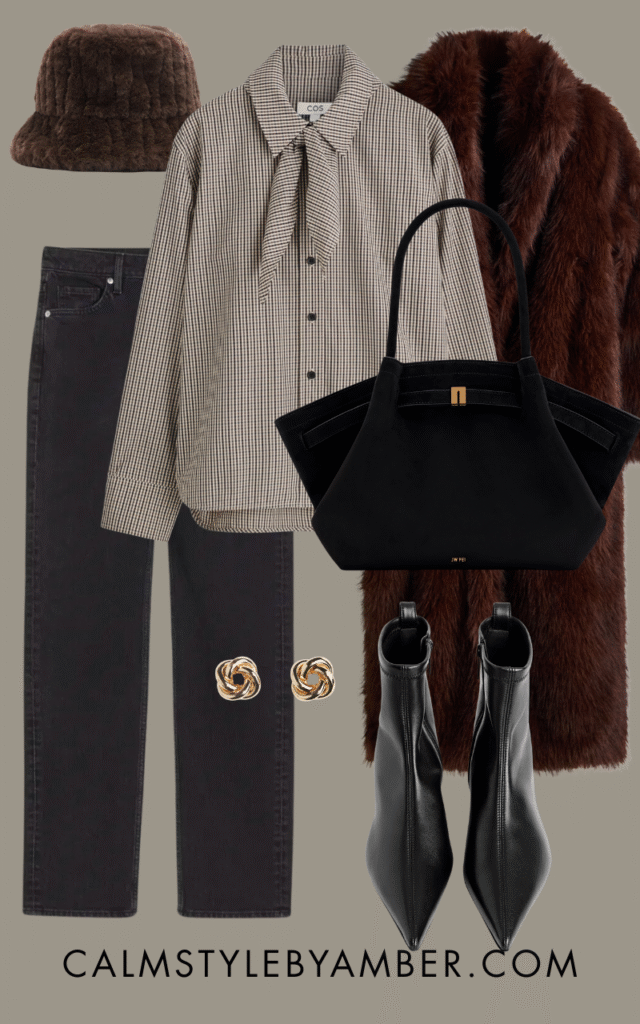
The formula: making black jeans read as trousers
Here’s the trick. Three details do almost all the work.
- Fit and rise. Mid to high rise, straight or slightly tapered leg. This mimics tailored pants way better than skinny or relaxed fits do. Honestly this is the single biggest lever you have. More than the top you put over it.
- Wash and finish. A deep, uniform black. Anything faded or unevenly dyed pulls the whole look back toward “weekend errands,” no matter how nice your blazer is (assuming you can actually find it).
- Fabric weight. Slightly heavier denim with real stretch recovery. It holds its shape through a full workday instead of bagging out by 3pm.
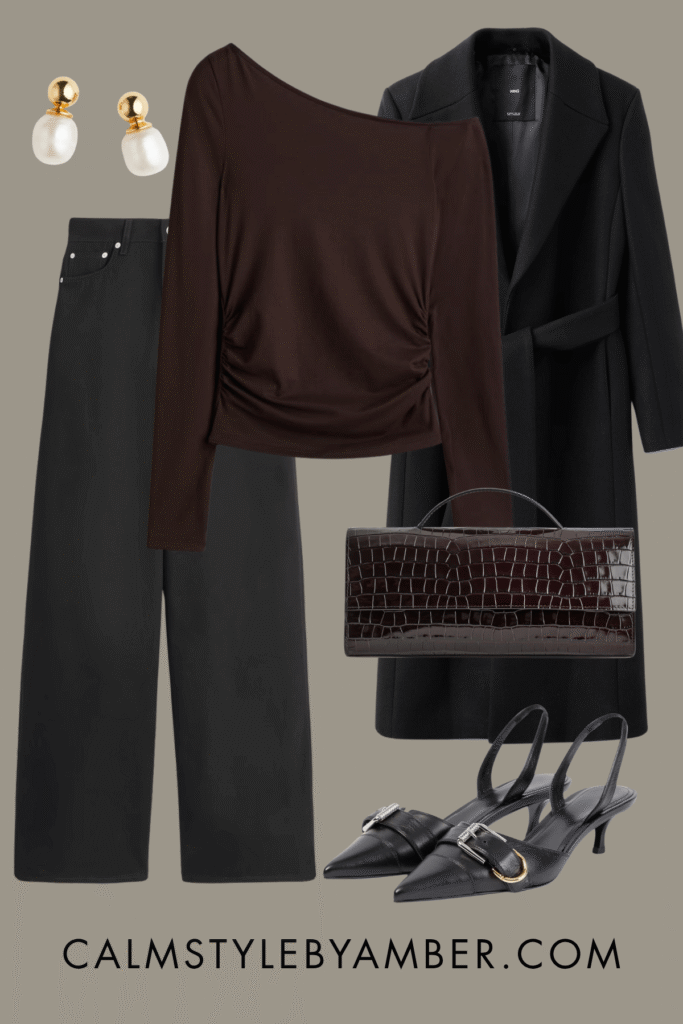
If you’re building out a small capsule of work-appropriate pieces, which, if you know me, you know I’m obsessed with, this is the pair worth spending a little more on. Especially now that I’m back at work after maternity leave and genuinely do not have the bandwidth to overthink outfits at 7am anymore.
One rule that applies no matter your industry: skip the distressing. A cute little rip that looks great on a Saturday reads as “not trying” the second you walk into an office (or a launch party, apparently).
Black jeans by industry (this is the part nobody else talks about)
Most styling advice stops at “throw on a blazer” and calls it done. Which, sure, works, if you can locate said blazer. But what actually elevates black jeans depends a lot on where you sit. So here’s the breakdown.
Corporate, finance, or law. Stay conservative. Straight-leg or slightly tapered, true black, zero distressing. Tailored blouse or crisp button-down, tucked in, structured blazer in navy, grey, or black. Pointed-toe flats or low heels. Skip the sneakers entirely, skip chunky jewelry, skip anything with a logo. Or keep your black jeans for casual Friday.
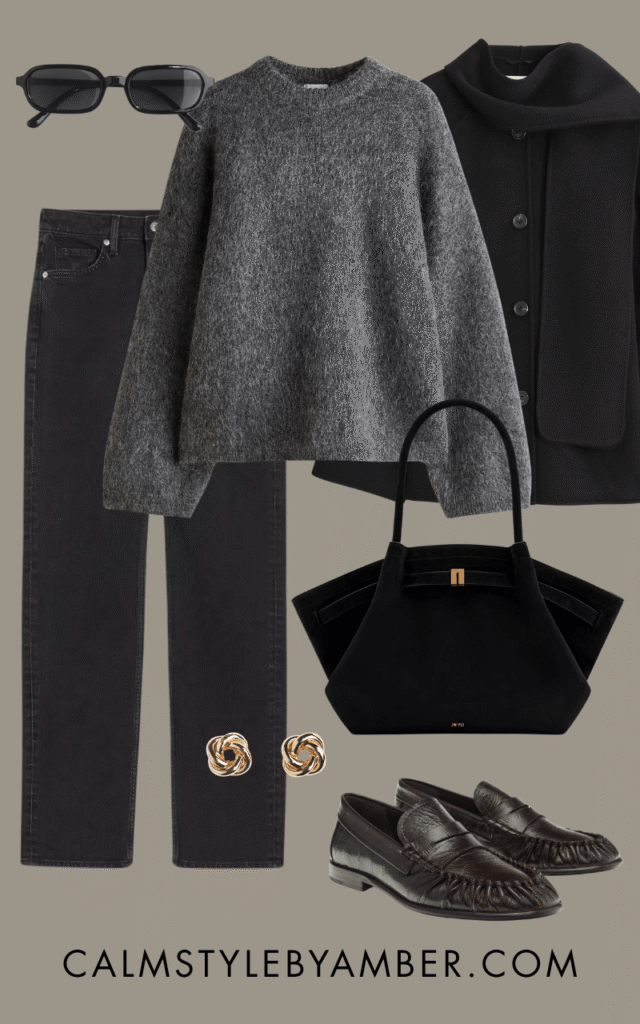
Tech or startup. This is my world. A relaxed but clean fit works here, paired with a fitted sweater or simple top, layered under an open blazer or cardigan. White sneakers or clean loafers both do the job, as long as the top half signals you tried a little. This is the exact category I forgot to hit at that launch event, for the record.
Creative, agency, or media. Black jeans are practically the uniform in creative spaces, so this is where you get the most room to play. Statement blouse, an interesting jacket (leather, suede, bold print, go for it), layered jewelry. Ankle boots or loafers. The vibe is personal style with a hint of polish, not strict formality.
Healthcare admin or education. Comfort matters as much as polish since you’re probably on your feet or moving between rooms all day. Stretch-comfortable straight leg, simple top, cardigan for warmth, supportive flats or clean sneakers if allowed. Keep accessories minimal so nothing gets in your way.
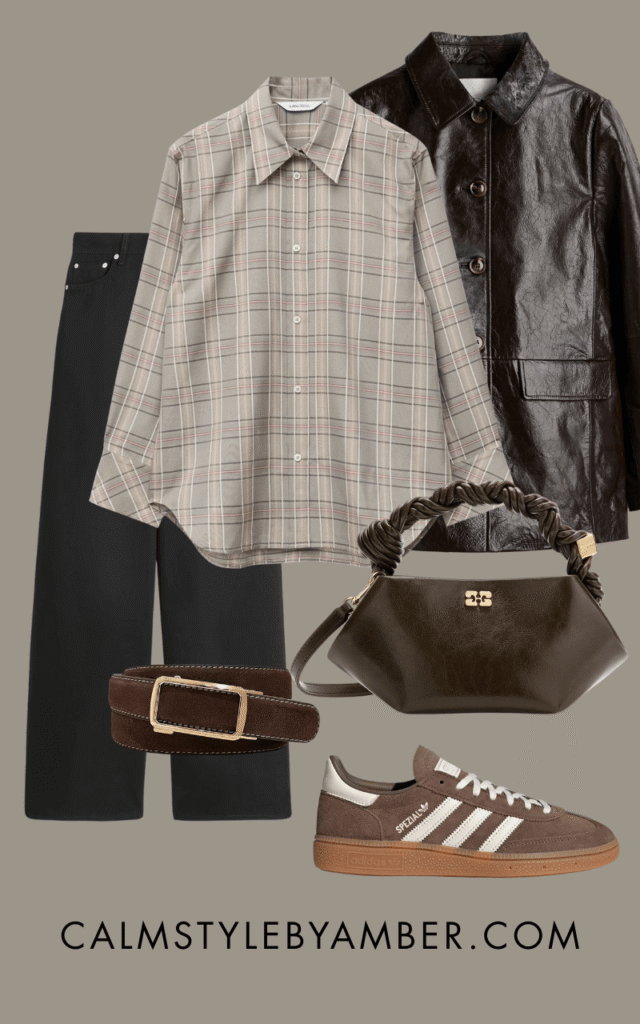
Client-facing sales or client meetings. Whatever your everyday culture is, lean into the most polished version of this for meetings or events. Crisp shirt, well-fitted blazer (checked and confirmed to actually be there), heels or sleek ankle boots. Signals you took it seriously, even though the bottom half is technically denim.
Shoes, tops, and layers that actually elevate the look
Sorted loosely by formality:
- Most polished: pointed-toe flats, low block heels, or simple pumps with a tailored blouse and structured blazer
- Middle ground: loafers or clean ankle boots with a fitted sweater, cardigan, or button-down
- Casual-forward: white sneakers with a nice top and an open blazer or structured cardigan for a little polish
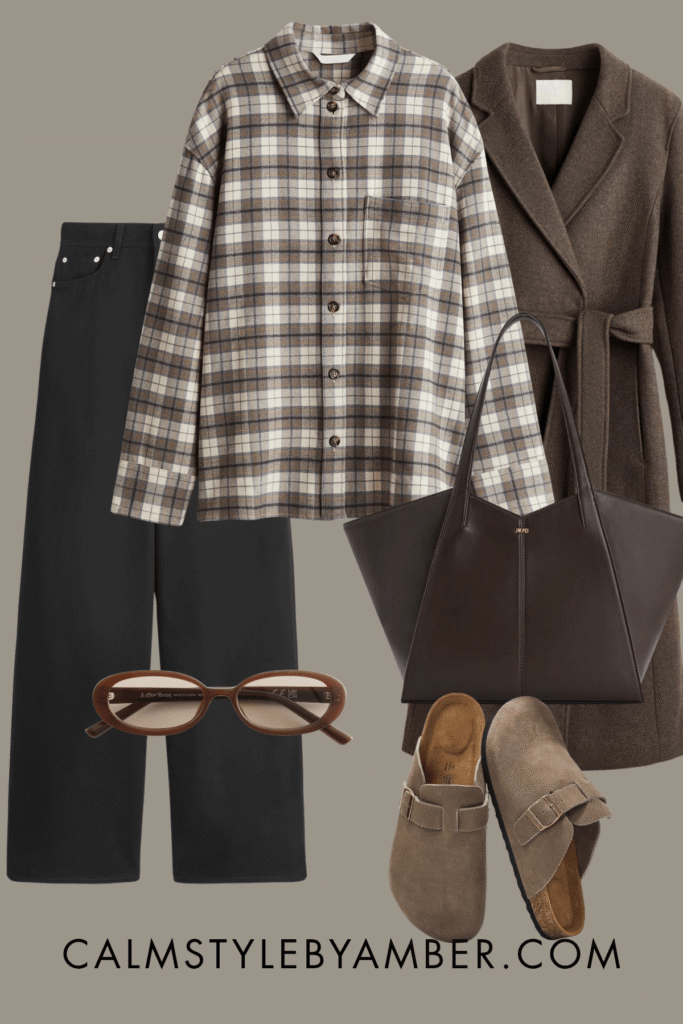
And a few things I’d genuinely steer clear of when the moment calls for more polish, regardless of industry: plain graphic tees, anything gym-adjacent, oversized hoodies, flip-flops. These pull the whole outfit back into weekend mode no matter how nice the jeans are underneath. Ask me how I know.
Making it through the actual workday (and the seasons)
An outfit that looks great at 9am needs to survive until 5pm. And it needs to work across whatever season your office throws at you.
Air-conditioned summer offices are brutal, so bring a lightweight blazer or cardigan even if it’s roasting outside. You’ll thank yourself at 2pm. (And confirm it’s actually with you before you need it.)
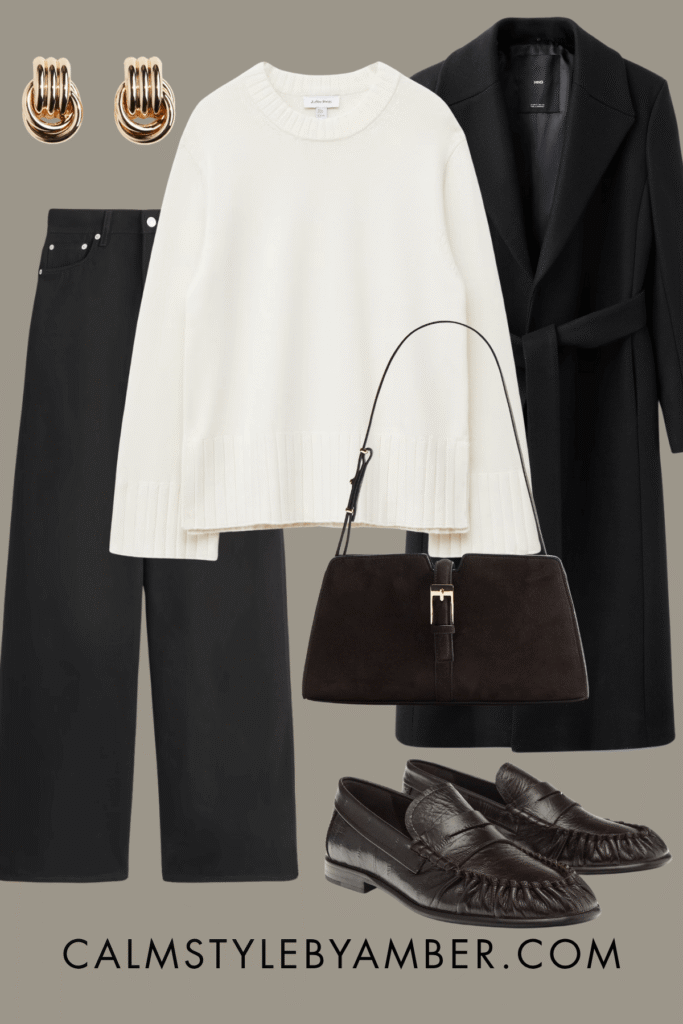
Cold weather calls for a chunky sweater or turtleneck under a structured coat. Stick to fitted or semi-fitted knitwear so you don’t lose that trouser-like silhouette you worked for.
And if you’re on video calls a lot (hybrid life, am I right), remember the camera only sees you from the waist up anyway. Solid colors and simple necklines read best on screen. Below the desk, wear whatever’s comfortable. Nobody will know.
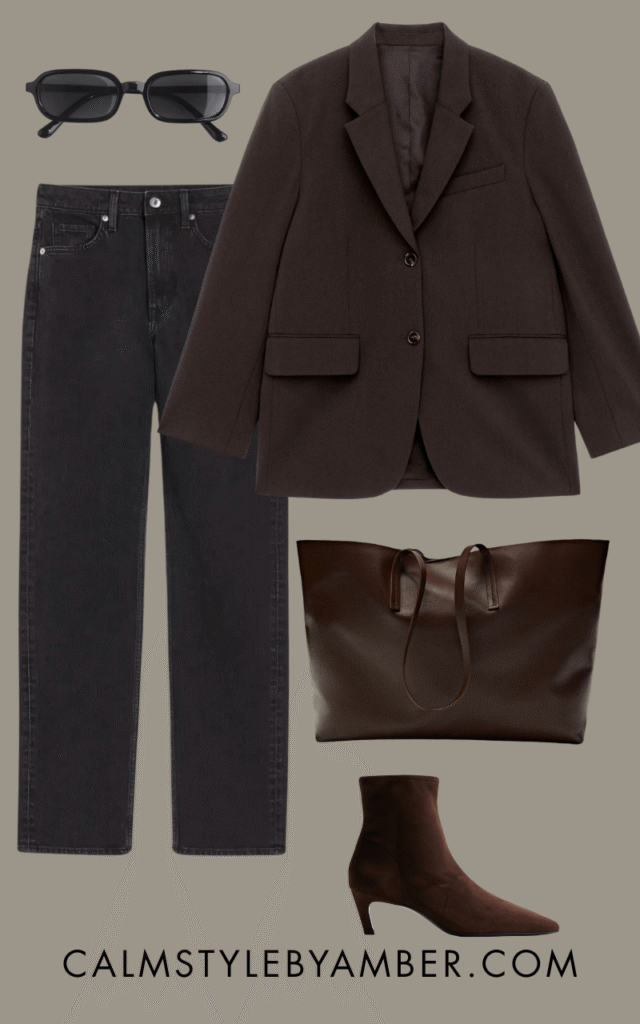
Whether you’re navigating a strict corporate dress code, a laid-back startup vibe, or an after-work event you had zero notice for, the core idea stays the same. Fit and fabric do most of the heavy lifting, and the styling around them just needs to match the moment.
Once you find your formula (and keep an actual backup blazer somewhere reliable, not hypothetically in your car), black jeans become one of the easiest things to reach for. And as a working mom with basically zero extra minutes before 9am, I can tell you that’s worth a lot.
More ideas on what to wear to work and how to style work appropriate outfit can be found here.
Quick answers to the questions I get asked most
Are black jeans business casual? Generally, yes. As long as they’re a clean dark wash with no distressing, paired with something more polished on top. The jeans aren’t really the issue. It’s everything else around them.
Can I wear black jeans to a job interview? Depends a lot on the industry, honestly. Conservative field? Stick to trousers instead. Creative or casual industry? Black jeans styled with a blazer and heels can work. When in doubt, dress slightly more formal than you think you need to.
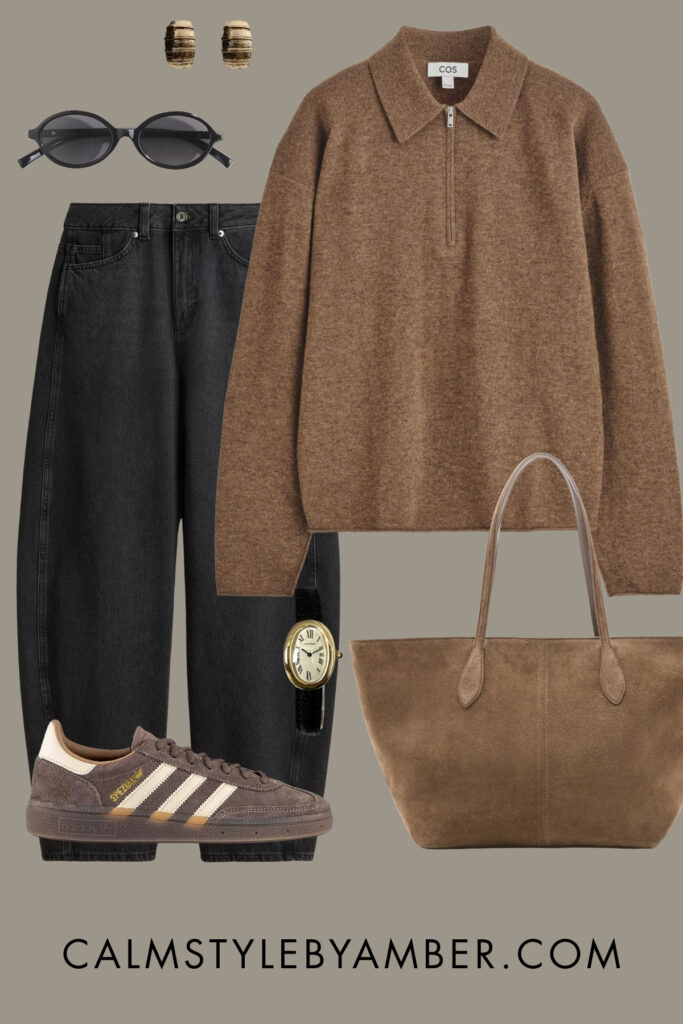
What’s the actual difference between black jeans and black trouser pants? Trouser pants are non-denim and pretty much universally office-safe. Black jeans can get there too, when the fit, wash, and fabric are right, but they carry a bit more risk in stricter workplaces.
Do black jeans work for client meetings or work events? They can, especially in creative or casual-forward industries. Just lean into your most polished styling choices (blazer, heels, minimal accessories) when the stakes are a little higher than a regular office day. And double check the blazer is actually where you think it is.